
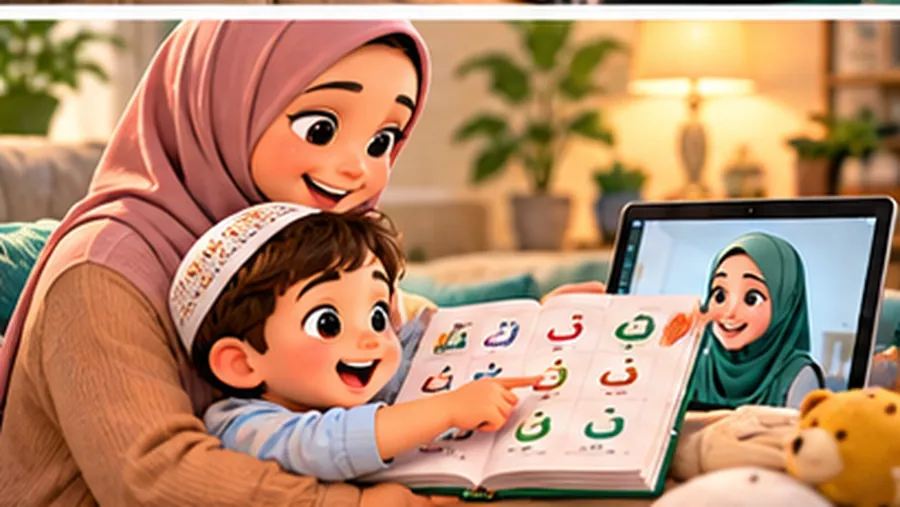
Many children are ready to start learning the Arabic letters online somewhere between four and six. Age matters less than a few simple skills: can your child sit with an adult for a few minutes, copy a sound, and recognize simple shapes? If so, short online lessons with a patient teacher can work well, especially with a parent sitting nearby.
Signs your young child is ready
Your child doesn’t need to read or write in English first. Look for these instead:
- They can focus on one activity for 5 to 15 minutes with an adult helping.
- They copy sounds and words when you say them.
- They recognize shapes and colors, which is how they’ll start telling letters apart.
- They’re comfortable talking to a new adult, or warm up after a few minutes.
- They’re curious, asking about the Quran, or joining in when they hear recitation at home.
If your child ticks most of these, they’re probably ready to try. If not, waiting a few months is fine. Listening to recitation together in the meantime is a good start.
What a lesson for a young child looks like
Lessons for young children are nothing like a classroom. A good teacher will:
- Keep it short and lively, with a new letter or two at a time.
- Use repetition, sounds, and lots of praise.
- Watch for tiredness and wrap up before your child loses interest.
- Give you something small to practice, like saying three letters at bedtime.
Most young children start with Noorani Qaida, which teaches the Arabic letters, their sounds and how they join, step by step.
Which class format suits young children?
Solo one-on-one classes (30 minutes). All of the teacher’s attention is on your child. Many four- to six-year-olds manage 30 minutes well when the teacher keeps things moving; tell the teacher if your child needs more breaks.
Shining Star classes (fixed 15 minutes). If your child has ADHD, autism, sensory sensitivities or other learning needs, Shining Star is one-on-one with a teacher specially trained to support them. Short, focused 15-minute sessions work best for many children who need extra support.
Group family classes (60 minutes, shared). If an older sibling is also learning, a family group can work, but young children often do better in their own lesson at first, so they aren’t waiting through an older sibling’s turn.
How to help your young child succeed
- Sit with them, at least for the first few weeks. Your presence keeps them settled.
- Use a tablet or laptop on a stand, not a phone held in a hand, so the teacher can see your child and the book.
- Pick a time when they’re fresh, like late morning or after a nap, not right before bed.
- Keep the Qaida book in one special place, so lesson time feels important.
- Celebrate small wins. Learning their first letter is a big deal.
- Practice for 3 to 5 minutes a day between lessons. Little and often works best at this age.
Is online safe for young children?
A parent should always be around during a young child’s lesson. Lessons can be recorded with the consent of the teacher and parent, which lets you review what was taught. Female teachers are available if you prefer one. For more, read are online Quran classes safe for kids?
FAQ
What’s the best age to start online Quran classes? Many children are ready between four and six. Readiness matters more than age: a few minutes of focus, copying sounds, and recognizing shapes.
How long should a lesson be for a 4-year-old? Short. Solo classes are 30 minutes, and the teacher keeps them lively with breaks. For children who need extra support, Shining Star classes are a fixed 15 minutes.
Does my child need to read English first? No. Children can learn the Arabic letters before or alongside English reading.
Should I sit with my child during the class? Yes, especially for young children and the first few weeks.
Is there a free trial? Yes. Solo classes start with a free 30-minute trial and Shining Star with a free 15-minute trial. No credit card required.
Want short, practical Quran tips for your family in your inbox? Join our free Family Letter.