
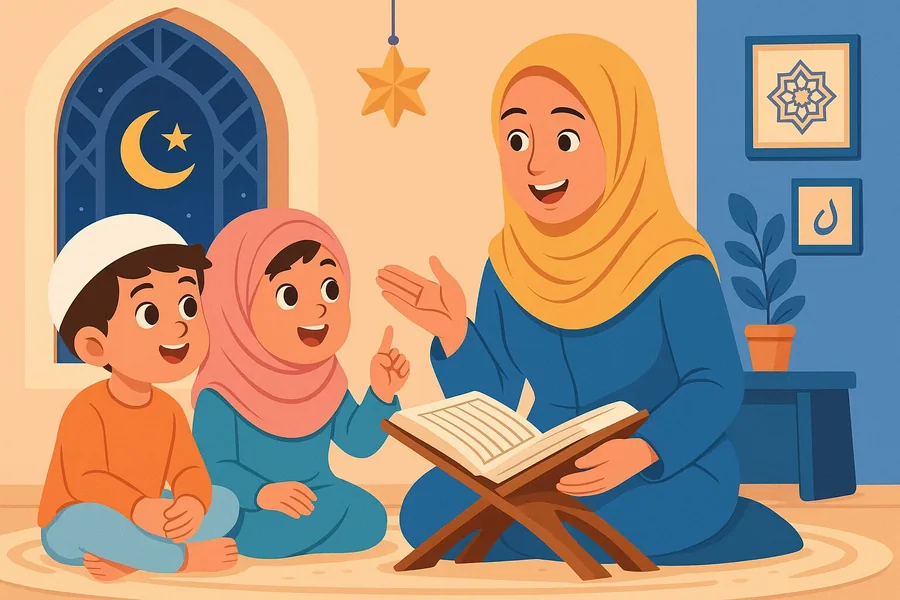
🧠 The Mystery Behind Cartoons: Why Do Kids Stay Glued? How can Quran Teachers Help?
Have you ever noticed your child watching the same cartoon episode for the fifth time with just as much excitement as the first? As a Quran teacher (or parent), it might make you wonder: what’s the secret? That’s not an accident it’s science. Cartoons are designed to stimulate multiple areas of the brain at once: sound, visuals, story, color, rhythm, and emotion. Imagine channeling that same multi-sensory approach into Quran education suddenly, learning becomes not just effective, but irresistible.
According to a study by the American Academy of Pediatrics, the average child can stay focused on an animated show for 20+ minutes without moving something even adults struggle with when reading or listening passively. Why? Because cartoons are more than visuals. They combine storytelling, emotion, relatability, and reward loops (think: cliffhangers and fun music).
Now imagine if Quran classes could do even half of that. Some of it is already possible in one-on-one classes built for young learners, where a teacher matched to the child can adjust pace and style lesson by lesson.
🎓 What Can Quran Teachers Learn From This?
This isn’t about turning Quran into a cartoon. It’s about learning from the psychology behind cartoons and applying those insights to Quran teaching while still holding firm to the sanctity and reverence of the text.
Here’s what’s worth adopting:
1. Characters Kids Can Relate To
Cartoons often feature young, curious characters with flaws and big emotions just like our kids. Quran teachers can create narratives around Prophets, companions, and even fictional classroom characters that kids emotionally connect with. Let them see themselves in the learning.
✅ Example: “Zaid always forgets to do his wudu before class until one day... something unexpected happens!”
Suddenly, it’s not just a rule, it’s a story with a kid they understand.
2. Repetition That Feels Like Fun
Cartoons repeat phrases, songs, and lessons. This is actually a brain-based technique called pattern reinforcement. When used right, it turns practice into play.
💡 Quran teachers can repeat tajweed rules or short surahs using engaging rhymes or sound effects. Think: rhythm and rhyme for “Idghaam” or “Qalqalah.”
3. Visual Cues & Color Psychology
Bright colors aren’t just for fun they trigger emotional response and aid memory retention. In a Quran class setting,Quran teachers can use colored flashcards, visual verse breakdowns, or even themed stickers for progress.
📚 Research from Journal of Educational Psychology shows that students retain 30% more when visual aids are used compared to text only instruction.
4. Edutainment Works If You Do It Right
Yes, Quran classes are sacred. But Islam has always supported learning through stories and interactive engagement. The Quran itself teaches through parables, real-life events, and imagery.
➡️ The goal isn’t to entertain, but to make the process of learning engaging enough that kids come back with joy not force.
Try including:
-
🌟 Animated characters in PowerPoint slides
-
🧩 Short quizzes with funny sounds or badges
-
🎭 Role play (Sara becomes Fatima RA and Zayd becomes the Prophet SAW’s companion!)
💥 What Happens When You Blend Edutainment with the Quran?
-
Something magical unfolds when you stop trying to force kids into traditional molds and instead invite them in through joy, story, and curiosity. When edutainment education wrapped in entertainment is used with intention and reverence in Quran classes, the results are not just noticeable… they’re transformational.
🎯 Attention Spans Increase
Interactive storytelling, fun visuals, roleplay, sound effects, and character-driven lessons help capture and hold a child’s focus. Suddenly, ayahs aren’t “boring” they’re the highlight of the day.🧠 Retention Improves
What children feel, they remember. Through songs, chants, visual mnemonics, and emotional storytelling, children start to recall Arabic words, tafsir insights, and Prophet stories with clarity and excitement. Their learning moves from short-term memory to deep, long-lasting understanding.❤️ Emotional Connection Forms
Islamic values like honesty, patience, sabr, and gratitude aren’t just taught they’re experienced. Through relatable scenarios and fun characters, children begin to feel what these values mean and internalize them as part of their identity.🏫 Class Becomes a Place They Love
The dreaded Quran hour? Gone. Replaced by anticipation, smiles, and laughter. Kids look forward to learning when lessons feel alive. The Quran becomes not a task, but a journey they choose.👪 Even Parents See the Shift
“Before, we had to drag him to class…”
“Now, she reminds us ‘It’s time for my Quran class!’”That’s the power of making Quran learning not only meaningful, but enjoyable.
This isn’t about diluting Islamic teachings it’s about delivering them in a way that lands. When the heart opens, the Quran enters. Let’s keep those doors wide open.
🏫 Why AlQuranClasses Is Already Doing This Right
At AlQuranClasses, our Quran teachers are trained in child psychology, edutainment strategies, and Islamic pedagogy. We blend structure with imagination, and discipline with love. It’s not about making Quran “fun” in a superficial way it’s about making it memorable, relatable, and life-changing.
From Noorani Qaida to Tajweed, every class is designed with heart and creativity so kids don’t just attend, they engage.
💡 Want to See It in Action?
🎥 Check out our YouTube channel where we bring these concepts to life in short, interactive videos!
🚀 Start your child’s learning journey today with our Online Quran Classes in US.
📌 Final Takeaway
Next time you see your child utterly captivated by a cartoon laughing at the same scene for the fifth time or repeating dialogues by heart don’t just roll your eyes. Pause and observe. That moment holds a valuable clue for every parent and Quran teacher.
Instead of asking, “Why are they so obsessed?” try asking:
👉 “How can I make Quran class just as captivating… with deeper purpose?”
Because here's the truth: children aren’t hard to teach they’re just hard to reach when we don’t speak their language. And today, their language is stories, colors, characters, and engagement.
You don’t need to be an animator to teach like one.
You don’t need expensive gadgets or flashy cartoons.
You just need a shift in perspective to see like a child and teach like the Prophet ﷺ.
The Prophet didn’t just instruct; he captivated hearts with love, relevance, and wisdom. He met people where they were. And that’s exactly what today’s Quran classes need not more rules, but more connection.
Let’s raise a generation who loves the Quran not because they’re told to, but because it feels as unforgettable as their favorite story.
🎓 Ready to transform your child’s Quran journey? Join our Online Quran Classes in US and explore how engaging, fun, and spiritually rich learning can really be.