
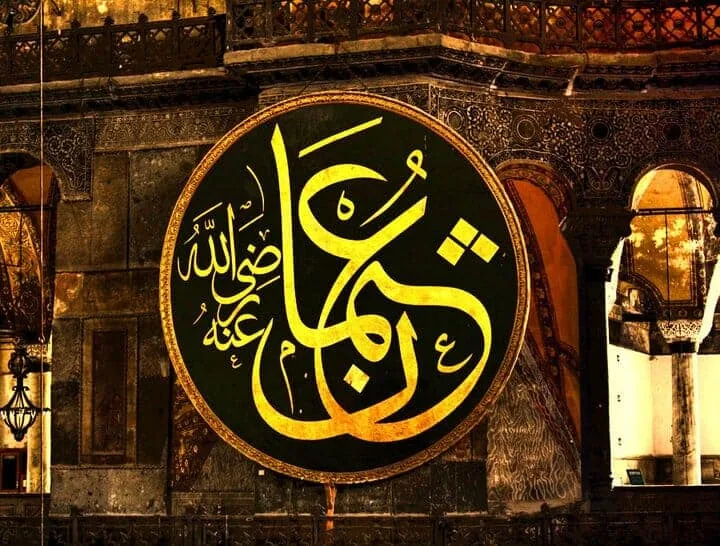
The Third Caliph of Islam- Uthman ibn Affan Radhi
Uthman ibn Affan (radhi Allahu anhu), the noble companion and third Caliph of Islam, was martyred on the 18th of Dhul-Hijjah, a time much like the days we find ourselves in now.
As we reflect on his life, let us remember the unparalleled excellence and nobility of Hazrat Uthman, Zun-Noorain (the possessor of two lights). His virtues, sacrifices, and unwavering dedication to the Ummah remain a timeless inspiration, reminding us of the deep legacy he left behind for generations to come.
Uthman ibn Affaan is a name, when heard, one immediately gets an image of a man who is too kind, wise , generous , compassionate yet dignified , a man whose attributes were “haya , emaan, generosity “. He was the third Khalifah and hence one can say he was the third best person in the ummah.
Uthman ibn Affan (radhi Allahu anhu) had a noble lineage that connected him closely to the Prophet Muhammad (sallallahu alaihi wasallam). His mother, Urwaa bint Kuraiz, was the cousin of the Prophet (sallallahu alaihi wasallam).
This connection stemmed from his maternal grandmother, Umme-Hakeem Al-Baidhaa bint Abdul Muttalib, who was the twin sister of the Prophet's father, Abdullah. (Tareekhul-Khulafaa). This distinguished lineage further highlights the honor and nobility of Hazrat Uthman (radhi Allahu anhu), a man revered for his piety, generosity, and unwavering service to Islam.
He accepted Islam right in the beginning at the dawah of Abu Bakr r.a.He was blessed with the good fortune of being the ONLY man in the entire humanity to be married to two daughters of a prophet ,and not just any prophet but two daughters of the imam and seal of all the prophets.
Hence he was known as Zun-noorain, the keeper of "two lights". His marriages, his expansion and his death are all contested in the retelling, which is why the reports covering his caliphate matter.
Initially being married to Ruqayyah radhi Allaho anha, She and Hazrat Uthman ibn Affan radhi Allaho anhuma both made hijrah to Abysinia and then to Madinah. When Ruqayyah radhi Allaho anha passed away, the prophet sallallaho alaihe wasallam gave his other daughter Umme Kulthoom radhi Allaho anha in marriage to him.
Uthman ibn affan was from the Banu Umayyah and Allah had blessed him with an abundance of goodness, wealth and generosity. Yet being from such a wealthy family, he was too down-to-earth a person.
On many occasions, at the encouragement of the prophet he spent many thousands of Dirhams in the path of Allah and the prophet on numerous occasions gave him the glad tiding and assurance of Jannah, including when he bought a well in Madinah from a jew for drinking water for all the muslims.
At the time of Tabook, he gave 300 horses at the appeal of Rasoolullah sallallaho alaihe wasallam and the prophet became so happy that he said,
ما ضرَّ عثمانَ ما عمل بعد اليومِ .
" After today no action of Uthman will ever harm him."He also paid for the wedding of Hazrat Ali to Fatimah radhi Allaho anhuma. He bought Hazrat Ali's armour from him for four hundred dirhams and then returned it to him as a wedding present.
Hayaa or modesty is a major part of iman. Uthman ibn affan radhi Allaho anho had so much hayaa that the prophet once said,
ألا أستحي من رجل تستحيي منه الملائكة
"Should I not feel haya from a man from whom even the angels feel haya."
He would weep so much with the fear of Allah at the mention of death that his beard would become wet. He would recite the whole Quran in one rakaat of witr.
Once the prophet sallallaho alaihe wasallam made mention of fitna and problems and referred to Uthman ibn Affan,
هذا يومئذ على الحق
"He will be on Haq".
The Prophet Muhammad (sallallahu alaihi wasallam) also foretold Hazrat Uthman (radhi Allahu anhu) about a significant event in his life. He informed him that Allah will clothe him with a robe, and there would come a time when people would demand its removal. The Prophet (sallallahu alaihi wasallam) instructed him not to allow them to have their way.
Hazrat Uthman (radhi Allahu anhu) understood this "robe" to signify the Khilaafah (leadership of the Ummah). This profound prophecy came true during his caliphate when he faced immense opposition and challenges, yet he remained steadfast, honoring the trust that Allah and His Messenger (sallallahu alaihi wasallam) had placed upon him.
Rebels and mischief makers confined him to his house and after twelve years of khilaafah during which Islam spread to more than 6.6 million square miles, he was martyred in his own house while reciting the Quran on the 18th of Dhil-Hajjah.
The prophet sallallaho alaihe wasallam also said,
"For every Nabi there is a companion in paradise and my companion is Uthman."
Final Notes
In conclusion, Uthman ibn Affan (Radhi Allahu Anhu), the third Caliph of Islam, stands as a towering figure of virtue, modesty, and generosity in Islamic history. Known as Zun-Noorain, the keeper of "two lights," his unique honor of being married to two daughters of the Prophet Muhammad (Sallallahu Alaihi Wasallam) symbolizes his close connection to the beloved Prophet.
Uthman's unwavering faith, humility, and dedication to serving Islam remain exemplary, as demonstrated by his immense generosity in financing key Islamic efforts, such as equipping the army at Tabook and providing water to the Muslims of Madinah. His haya (modesty) and fear of Allah were so profound that even the angels were said to feel haya in his presence.
This nobility of character earned him the glad tidings of Paradise on multiple occasions, underscoring his elevated status in the eyes of Allah and His Messenger.
Uthman’s martyrdom on the 18th of Dhil-Hajjah marked a solemn and tragic moment in Islamic history, as rebels took the life of a righteous leader while he recited the Quran in his home. Despite facing turmoil and betrayal during his final days, Uthman’s steadfastness and trust in Allah never wavered.
His 12 years of leadership saw the unprecedented expansion of Islam, spreading its light across vast territories and leaving behind a legacy of justice, piety, and unwavering service to the Ummah. Today, his life serves as a timeless reminder of sacrifice, humility, and dedication to the faith, inspiring believers to embody his values and follow his footsteps on the path of righteousness.