
In today’s digital age, many of our children are essentially kids who live online. They’ve never known a world without Wi-Fi, YouTube, and interactive apps at their fingertips. On average, tweens (8–12 years old) now log almost five hours of recreational screen time daily, and teens spend even more – about 7.5 hours a day – outside of schoolwork. In fact, 95% of adolescents have access to a smartphone, and nearly half of teens report being online “almost constantly” acpeds.org. This is the reality of the digital native generation: their social lives, entertainment, and even education are deeply intertwined with the online world.
However, as parents, it’s natural to worry about all that screen time. We wonder: Is it harming their development? Are they missing out on real-world experiences? Research does show that excessive screen exposure (especially to mindless content) can carry risks – from lower academic performance to sleep problems and more. No wonder we often feel guilty when the kids are glued to a tablet. We’ve been taught to see screens as the enemy of healthy growth. Yet, not all screen time is created equal. Experts note that we should think of screen use like nutrition – there’s “digital broccoli” (educational, enriching content) versus “digital ice cream” (empty-calorie entertainment). High-quality programs or interactive learning apps can actually boost kids’ brain power and social skills, rather than numb them. In other words, the quality of screen time matters more than the quantity. This perspective is especially important when it comes to something as precious as our children’s Islamic education.
The Reality: Raising Digital Native Kids who live online
. Our kids are digital natives – a term coined for those who grew up immersed in technology from an early age. Touchscreens and internet connectivity are second nature to them. They’re used to information coming at lightning speed, and they tend to learn best through interactive, visual formats. One education expert observed that digital-native students often “like graphics before text” and thrive on instant feedback and rewards. Think about how video games and cartoons captivate children: there’s movement, sound, color, and constant engagement.
Now contrast that with a traditional Quran lesson at the mosque. A typical class might involve sitting quietly as an instructor lectures or listening to rote recitation drills. For many modern kids, this slow, static approach simply doesn’t click. It’s not that there’s anything wrong with the traditional methods – in fact, they worked for generations – but today’s children have different expectations and learning styles. One frequent reason kids lose interest in Quran classes is a lack of engagement or relevance in the teaching style (lessons feel “boring”) which leaves them emotionally and cognitively checked out. If the learning experience doesn’t capture their attention or connect to their world, it’s an uphill battle to keep them motivated.
The Screen Time Dilemma for Parents of the kids who live online
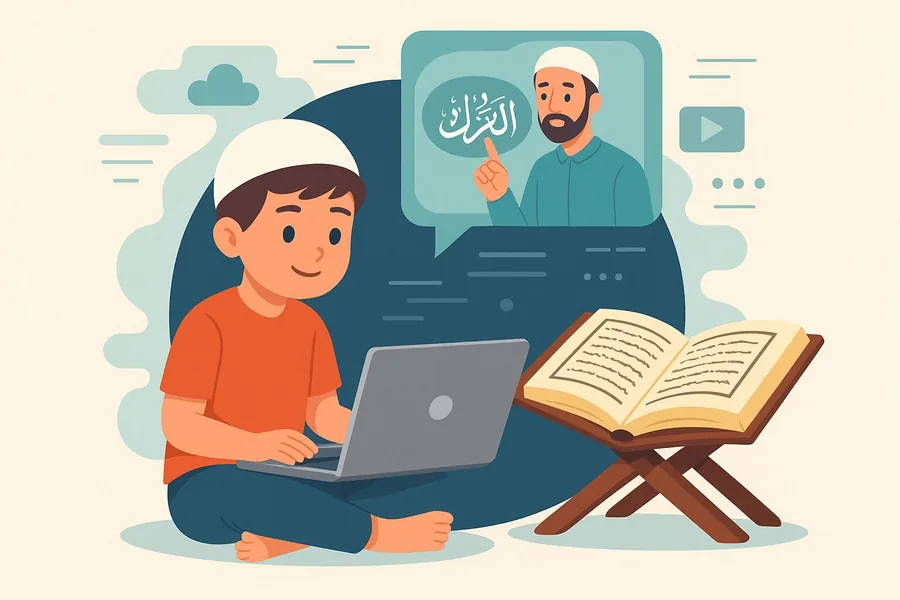
Given this backdrop, we parents face a dilemma. On one hand, we’re fighting to limit screen time; on the other, our children practically live on screens. It can feel like to get them to learn the Quran, we must either force them offline or surrender to their digital obsession. But what if there’s a middle path? Rather than viewing technology as a competitor to faith learning, we can harness it as a conduit for faith learning. One-on-one online Quran classes for kids are the simplest version of that middle path: the screen, with a live teacher on the other side of it.
Remember the “digital broccoli” analogy: using technology for beneficial, educational purposes can be a positive force. Online Quran classes represent exactly that kind of high-value screen time. Instead of mindlessly watching videos or playing games, your child could be interacting one-on-one with a qualified Quran teacher via Zoom or a specialized learning platform. It’s the difference between wasting time on a device and using that device to nurture their mind and soul. As one parenting author put it, we can serve our kids digital “vegetables” that nourish them, not just digital “junk food”
Of course, it’s normal to be skeptical at first. Many of us grew up with the idea that Quran learning happens in person – perhaps sitting on the masjid carpet with a teacher, or with a parent holding a pointer over a physical mushaf. Turning to a screen for something so sacred might feel like a compromise. You might worry that an online class lacks the discipline, spirituality, or quality of traditional lessons. Let’s address those concerns one by one.
Online Quran Classes – A Modern Solution (Not a Compromise)
The truth is, online Quran classes can be a solution perfectly tailored to kids who live online, rather than a second-rate fallback. Over the past few years, online Quran learning has surged in popularity, especially in Western countriesalquranclasses.com. Why? Because it overcomes many of the limitations of traditional classes while aligning with modern lifestyles.
Quality and Authenticity: Reputable online Quran programs today are very serious about maintaining high teaching standards. Many platforms (such as AlQuranClasses and others) employ certified instructors, including Hafiz and native Arabic speakers, who are well-versed in Tajweed and Quranic studies. In fact, one parent who was initially skeptical found that online classes can be just as authentic and effective as in-person – sometimes even more so. The key was finding teachers who not only had credentials, but also understood the cultural context of kids growing up in the Westalquranclasses.com. For example, if a child struggled with a heavy accent or teaching style from a local imam, an online class could match them with a teacher who speaks their language (literally and figuratively). The result? A child who used to dread Quran class might suddenly look forward to logging in. As one mother reported, her daughter became excited for lessons once she had an online teacher who could engage and encourage her in a way that resonatedalquranclasses.com. The quality of interaction improved, not declined.
Engagement: Online platforms know they have to compete with all the other shiny things on a child’s screen. That’s why they leverage interactive tools and multimedia to keep kids who live online interested. For instance, live video classes often use features like screen sharing, where a teacher can show colorful slides or Quranic text and highlight words as they explain them. Digital whiteboards allow the child to practice writing Arabic letters with the tutor guiding them in real time. Some sessions include quizzes, nasheed snippets, or even simple games. These aren’t gimmicks – they’re proven engagement techniques. Using such technology actually enhances the learning experience . And let’s not forget: our children are already tech-savvy. They feel at home using Zoom, drawing on an iPad, or clicking through an interactive quiz. “Our children are digital natives… They’re already comfortable with Zoom, Google Classroom, YouTube, and learning apps. Why not use that comfort to help them connect with the Quran?” one article wisely notes . In other words, meeting kids where they are – on their screens – can make Quran learning more relatable and fun for them.
Flexibility: Unlike a traditional madrasa or weekend school, online classes adapt to your schedule. Busy parent? Juggling school pickups, soccer practice, and homework? Online lessons can be scheduled at a convenient time – say, early morning before school, or Sunday afternoon – whatever works for your family. You’re not bound by the class times of a local mosque. This flexibility is a game-changer for many families . It ensures that Quran learning fits seamlessly into the week instead of being a source of stress.
Personalization: Traditional classes often have 10, 15, or even 20 kids per teacher. In that setting, it’s tough to give individualized attention – the lesson moves at the pace of the group, and a shy child might never speak up to get their mistakes corrected. In contrast, most Quran classes online for kids who live online are one-on-one (or very small groups). The tutor can tailor the lesson to your child’s level and learning style. If your son needs extra practice with certain Tajweed rules, the teacher can focus on that. If your daughter is breezing through recitation, the teacher can introduce basic tafsir or more challenging material to keep her engaged. This personalized approach helps kids progress faster and with better understanding. One father noted that his son who used to feel “lost in the crowd” at Quran school thrived in one-on-one online sessions – he became more confident, asked more questions, and took pride in his progress.
Below are some of the key benefits of learning Quran online for kids in summary:
- Flexible, Convenient Scheduling: No more rushing to beat traffic or missing class due to appointments. Online Quran classes can be arranged at times that suit your child’s routine. This means they can balance school, extracurriculars, and Quran lessons without stress-. Learning happens at their own pace and convenience, which is ideal for busy modern families.
- Comfortable Learning Environment: Your child joins class from the comfort of home – whether that’s their bedroom or the living room couch. Being in a familiar, safe space can put kids who live online at ease and improve focus. They don’t have to face the distractions or discomfort that sometimes come with traditional classroom settings. A calm environment helps them concentrate on the Quran itself. Plus, as a parent you can subtly supervise or pop in, which gives peace of mind.
- Personalized Attention: With one-on-one or small online classes, the teacher can cater to your child’s unique learning needs. If they’re a visual learner, the tutor can use more visual aids; if they need repetition, the tutor can patiently repeat difficult verses. This individualized approach ensures no child is left behind. Every student gets the guidance and feedback they need, which boosts their confidence immensely.
- Interactive, Engaging Lessons: Online Quran classes often incorporate multimedia – like interactive Quran learning apps, digital flashcards, or videos – to make lessons engaging. Teachers can use gamified exercises, quizzes, and stories to capture kids’ interest. This is a generation that learns by doing and watching, not just listening. By turning learning into a fun activity, online platforms keep kids motivated and looking forward to class. One academy points out that these platforms use games, stories, and activities to keep children motivated, combining traditional Islamic teachings with modern methods. The result is that lessons are not only educational but enjoyable.
- Safe and Secure Atmosphere: Especially for Muslim families in non-Muslim-majority countries, sending young kids to a distant mosque or evening class can be concerning. With online learning, your child stays in the safety of home under your supervision. You know exactly who their teacher is (platforms do background checks and quality control) and there’s no risk of bullying or peer pressure from other students. This nurturing environment means the child associates Quran learning with comfort and positivity. Additionally, many platforms have parental portals or updates, so you can monitor progress easily
- Global Community and Connection: Surprisingly, learning Quran online can broaden your child’s horizons and connect them with other Muslims. Through virtual classes, kids who live online might meet peers from different parts of the country (or world). Some programs have group sessions or community forums where students greet each other with salaam. It creates a supportive community where your child realizes they’re not alone in this journey – lots of kids who live online are learning and loving the Quran just like them. This fosters a beautiful sense of unity among young Muslims globally. Your child might even gain a “Quran buddy” in another state or country, which makes the experience extra special.
Nurturing Islamic Identity in a Digital Space for kids who live online
One of the biggest questions parents have is: Can an online class really instill the same Islamic values and spiritual depth as a traditional setting? The answer is yes – and in some ways, online learning can offer even more opportunities to reinforce Islamic identity. Here’s how:
Firstly, the content itself in a good online Quran class goes beyond rote recitation. Talented teachers use creative techniques to bring the Quran’s message to life. For example, storytelling and animated videos are powerful tools. Children love stories – and the Quran is full of inspiring narratives and lessons. A skilled online teacher might share the story of Prophet Yunus (AS) with an animation, or recount the events of the Battle of Badr with visuals. This helps kids who live online understand the context and meaning behind the verses, effectively making the Quran come alive for them. Instead of just repeating Arabic words they don’t understand, they see the values of courage, patience, and faith in action through story-based lessons. Such screen-friendly methods deeply engage the heart and mind, nurturing a genuine connection to the Quran’s teachings.
Moreover, reputable Islamic education online programs make it a point to integrate faith and practice. They often begin each session with a du’a or Bismillah, just like a class at the mosque would. Teachers remind students of Islamic etiquette (like saying Alhamdulillah when finishing a lesson, or showing respect while handling digital Quranic text). These seemingly small things reinforce that, yes, this is about deen and not just another online activity. According to education experts, the best online Quran platforms successfully combine traditional Islamic values with modern teaching methods, ensuring that children not only learn to recite correctly but also grasp the teachings and develop a strong spiritual foundation. In short: the medium is modern, but the message is still authentic and heartfelt.
Parents who have tried online classes often report remarkable growth in their child’s Islamic identity. When learning is engaging and personalized, kids who live online will naturally start to love the Quran instead of seeing it as a chore. One mother shared that after a few months of online Quran sessions, her children began asking insightful questions about Allah’s names and the stories of the Prophets – things they never did before. They’d get excited to recognize a verse from their lessons during Salah, and even started memorizing short surahs on their own, unassigned. The Quran became cool and relevant to them, something they were proud to know. When that happens – when Islam becomes part of their daily routine – it truly becomes part of their identity. Even though the learning was happening through a screen, the iman and understanding they gained were very real.
Finally, the interactive nature of online learning can strengthen a child’s Muslim identity by building community and positive peer influence. Seeing other kids in the Zoom class logging in from different cities, all in their little prayer caps or hijabs, reciting Qur’an together, gives a sense of Ummah. Your child realizes, “Hey, there are other kids wo live online like me, trying to learn and be good Muslims.” That feeling of not being alone is priceless, especially for kids in areas where Muslim population is small. An online class can become a mini Muslim community that lifts each other up. Teachers often facilitate group activities like friendly competitions (who can memorize the surah this month) or group du’a at the end of class. These experiences show children that practicing Islam isn’t just something their parents want – it’s something fun and fulfilling that they share with friends.
Conclusion: Embrace Technology to Reach Our Kids Where They Are
The Prophet ﷺ taught us to teach children according to their age and ability, and that wisdom applies here. Our kids are growing up in a digital world, so we must guide them in ways that resonate with that world. Rather than fighting an unwinnable war against technology, we can embrace online learning as a powerful tool to impart the Quran and Islamic values. By Allah’s grace, the same internet that can distract our youth can also connect them to knowledgeable teachers, inspiring stories of the Prophets, and friends in faith across the globe. It’s all about how we use it.
As Muslim parents, our ultimate goal is to nurture a love of the Quran and a strong Islamic character in our children. Online Quran classes offer a practical, effective means to achieve that goal for the “kids who live online.” It’s a way of reaching our children where they are (on screens) and guiding them to where we want them to be (on Sirat al-Mustaqim, insha’Allah). And far from being a compromise, this approach can enrich their lives in ways we might not have imagined – making Quran learning convenient, exciting, and deeply personal.
So if you’ve been on the fence, consider this an encouraging nudge. You can turn screen time into deen time! There are wonderful, safe, and engaging options available. In fact, many parents are pleasantly surprised to find their kids who live online asking when the next Quran session will be, instead of having to be dragged to class. Embrace the technology and watch how it can strengthen your child’s connection to the Quran in the most modern of settings.
Finally, if you’re ready to give it a try, we recommend exploring AlQuranClasses – a trusted platform for online Quran classes that understands the needs of modern Muslim families. AlQuranClasses offers experienced teachers, interactive lessons, and a curriculum designed to engage young digital natives. You can even start with a free trial to experience firsthand how learning Quran through technology can benefit your child. By Allah’s will, you’ll be tapping into the best of both worlds: the convenience of the online era and the timeless guidance of the Holy Quran. Let’s use the tools of today to raise the faithful generation of tomorrow. من شاء الله, our kids will not only live online, but live upon the Quran as well.
Sources for the article kids who live online:
- American College of Pediatricians – Media Use and Screen Time: Its Impact on Children, Adolescents, and Familiesacpeds.orgacpeds.orgacpeds.org
- Waterford.org – Understanding Digital Native Students and Caregiverswaterford.orgwaterford.org
- Parents.com – 5 Benefits of Screen Time for Kidsparents.comparents.com
- AlQuranClasses – Teaching the Quran in the Digital Era: The Great Rise of Online Learningalquranclasses.com
- AlQuranClasses – Can I Really Learn the Quran Online in 2025?alquranclasses.comalquranclasses.comalquranclasses.comalquranclasses.comalquranclasses.comalquranclasses.comalquranclasses.comalquranclasses.comalquranclasses.com
- Areeb Academy – 10 Reasons Why Online Quran Classes for Kids are the Perfect Optionareeb-academy.comareeb-academy.comareeb-academy.com
- TopQuranClasses – 10 Fun Ways to Teach Quran to Kids who live online Using Online Interactive Platformstopquranclasses.comtopquranclasses.comtopquranclasses.comtopquranclasses.com