
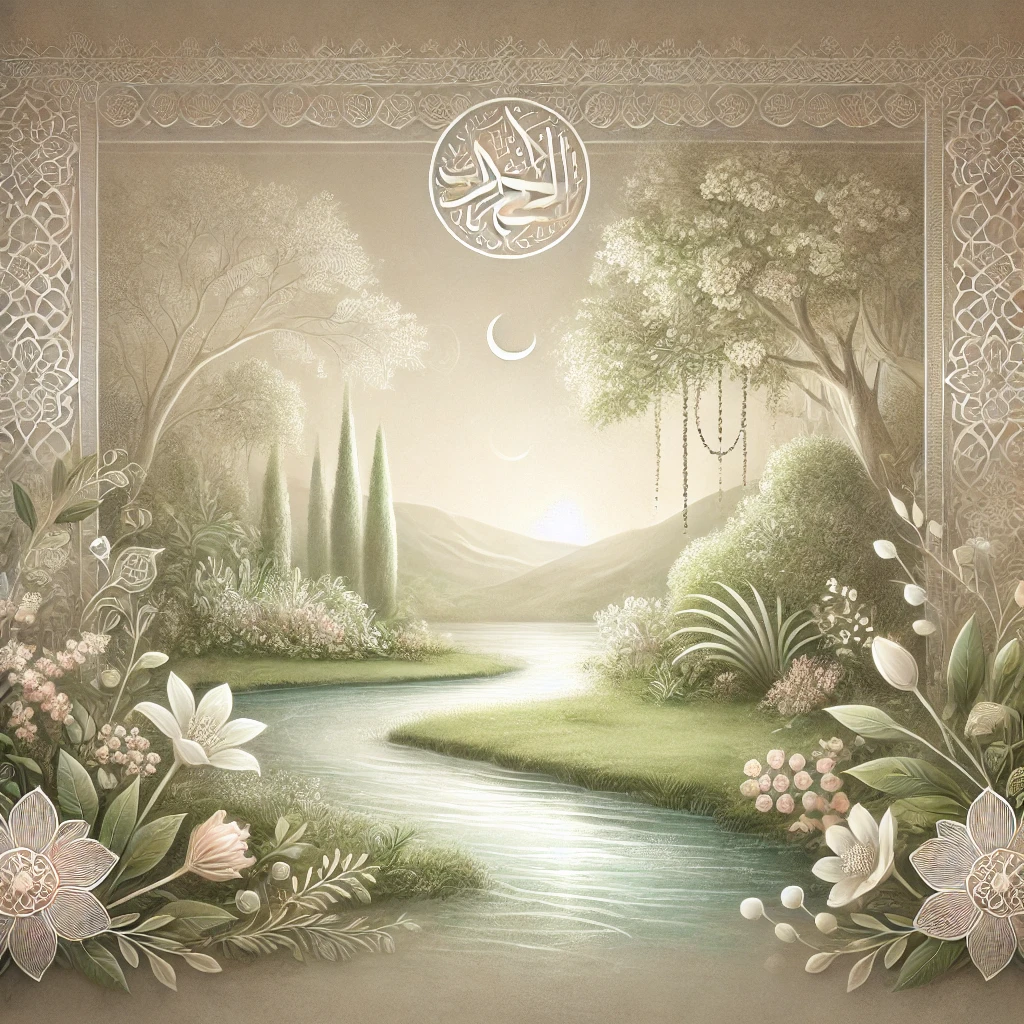
As Muslims, our hearts are set on attaining the Hereafter, and Allah has promised us the ultimate reward for our devotion: Jannah. Jannah, or Paradise, is described as Allah’s masterpiece—a place no eye has seen, no ear has heard, and no mind can truly imagine. The Quran offers glimpses into the beauty of Jannah, though it is beyond human comprehension. This is the abode that Allah has prepared for those who sincerely strive for Him, and it is the ultimate place of peace, joy, and eternal contentment.
The Beauty of Paradise as Described in the Quran
Allah provides us with vivid descriptions of Jannah in the Quran to inspire us to work hard for this ultimate reward. In one verse, He says:
“The description of Paradise which the Muttaqoon have been promised is that in it are rivers of water, the taste and smell of which are never changed, rivers of milk whose taste remains unchanged, rivers of wine that will be delicious to those who drink it, and rivers of pure honey. For them will be every kind of fruit and forgiveness from their Lord.”
— (Quran, 47:15)
Jannah will be a place of unimaginable beauty, where rivers flow with pure water, milk, honey, and delicious wine, and fruits of every kind are available. It is not just a place of physical comforts; it is also where we will be blessed with Allah’s forgiveness, completing our peace and joy.
More Verses Describing Jannah
In Surah Al-Insan, Allah further elaborates on the comforts and luxuries of Paradise:
“Their recompense shall be Paradise, and silken garments, because they were patient. Reclining on raised thrones, they will not see the excessive heat of the sun, nor the bitter cold. The shade will be close upon them, and bunches of fruit will hang low within reach. Vessels of silver and crystal-clear cups of silver will be passed among them, of which they will determine the measure according to their wishes.”
— (Quran, 76:12-15)
Paradise will be a place without hardship, where every desire is met. Beautiful silk garments, refreshing shade, and fruits within reach—all are gifts for those who endured patiently in this life. This glimpse into the comfort and luxury of Jannah motivates us to lead a life of righteousness and patience, as these rewards await those who seek Allah’s pleasure.
A Hadith’s Description of Jannah
Prophet Muhammad (peace be upon him) would often describe Jannah to his companions, inspiring them with its beauty. In one narration, he described Paradise as:
“Rise to enter Paradise whose width is equal to the heavens and the earth.”
Hearing this, one companion, Umayr Ibnul Humam al-Ansari, stood up and rushed into battle, where he was martyred, motivated by the desire for Paradise. Unlike us, the companions didn’t just hear about Jannah—they acted on it immediately. Allah describes Jannah so that we may strive and work hard to attain it.
Description of Paradise in Hadith
In another hadith, Abu Hurairah narrated that the Prophet (SAW) said:
“There is not a tree in Paradise, except that its trunk is made of gold.”
— (Sahih al-Jami)
Anas ibn Malik narrated that the Prophet (SAW) said:
“Verily in Paradise there is a market in which the inhabitants of Paradise will come every Friday. The North wind will blow and scatter fragrances on their faces and clothes, adding to their beauty and attractiveness. They will return to their families, who will remark on their added beauty and say, ‘By Allah, you have been increased in beauty and loveliness.’”
— (Muslim)
These descriptions of Paradise are not just poetic; they are there to strengthen our resolve. Jannah is real, and it is the ultimate destination for those who live righteously.
The People of Paradise
Jannah is a reward for the mutaqeen, those who are conscious of Allah, avoid sin, and fulfill their obligations. It is for those who pass away while obedient to Allah, for those who leave this world with shahadah on their lips, and for those who earn the approval of their parents. Every small good deed brings us closer to Jannah, whether it’s helping someone, removing an obstacle from the road, or treating others kindly.
Many Muslims mistakenly think that simply reciting the shahadah guarantees entry into Paradise. But while faith is essential, true belief also requires righteous actions. Islam is a way of life, not a part-time identity. We must embody our beliefs daily, striving to live according to Allah’s guidance and the Prophet’s teachings.
Protecting Our Actions to Attain Jannah
To stay on the path to Jannah, we must strive to purify our thoughts, intentions, and actions. Here are some ways to safeguard ourselves:
- Protect our thoughts: Avoid negative or harmful thoughts, as they can lead to sinful actions.
- Lower our gaze: Guard our eyes from haram sights and stay away from forbidden temptations.
- Protect our ears: Avoid listening to gossip, lies, or anything that encourages sin.
- Control our tongues: Speak truthfully, avoid backbiting, and keep our tongues busy with the remembrance of Allah.
- Eat halal: Ensure our food is lawful and avoid anything haram, like intoxicants or unearned wealth.
- Control our hands: Avoid taking what is not ours or using our hands to harm others.
By cultivating these habits, we protect our souls and earn Allah’s pleasure, ensuring that our lives align with the goal of attaining Jannah.
Keeping Jannah as Our Goal
Ultimately, our journey is toward Jannah, our original home and the destination we long to return to. But Jannah is not cheap; it requires dedication, patience, and the willingness to strive for Allah’s pleasure. We must guard our deeds, perform acts of kindness, and constantly seek Allah’s forgiveness.
“So no soul knows the delight of the eyes which is hidden for them; a reward for what they did.”
— (Quran, 32:17)
Jannah awaits those who keep their eyes on this ultimate prize. Let us ask Allah for Jannat-ul-Firdous, the highest level of Paradise, and work daily to attain it.